Aquarium
The Aquarium
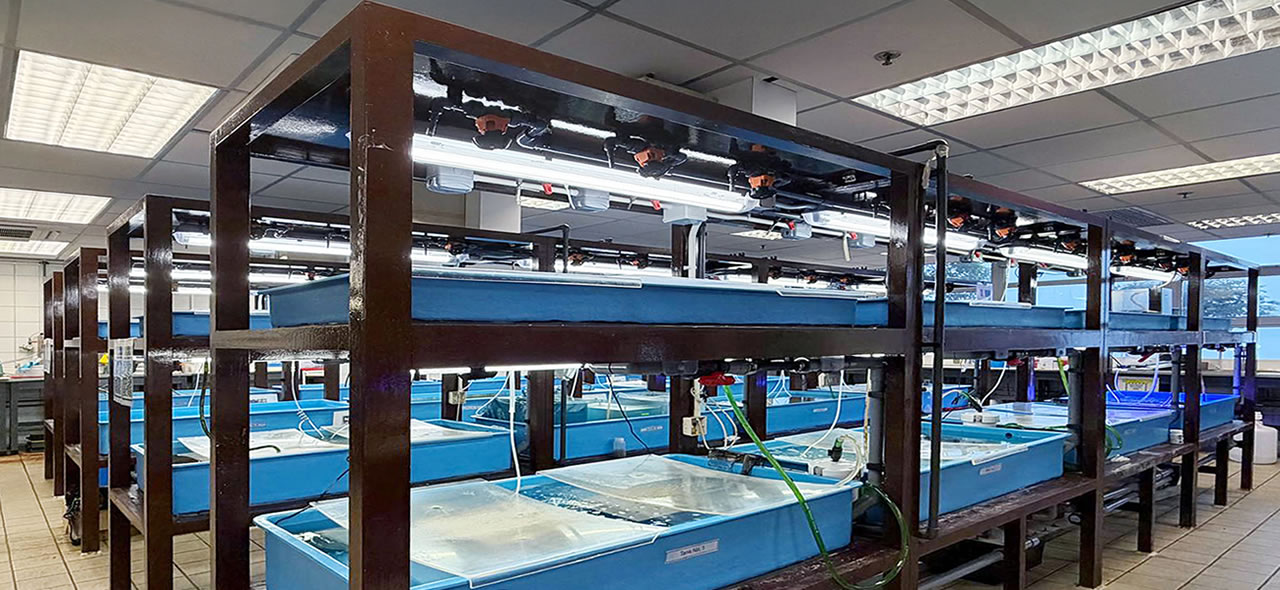
The seawater in the Eastern part of Hong Kong is considered as cleaner and less disturbed by human activities. Fresh seawater from the Port Shelter nearby is supplied to the facility 24-7. Raw seawater and filtered seawater (filtered with 5 μm filter for twice) supplies are set up in the facility for users to acquire seawater for experiment or sampling easily.
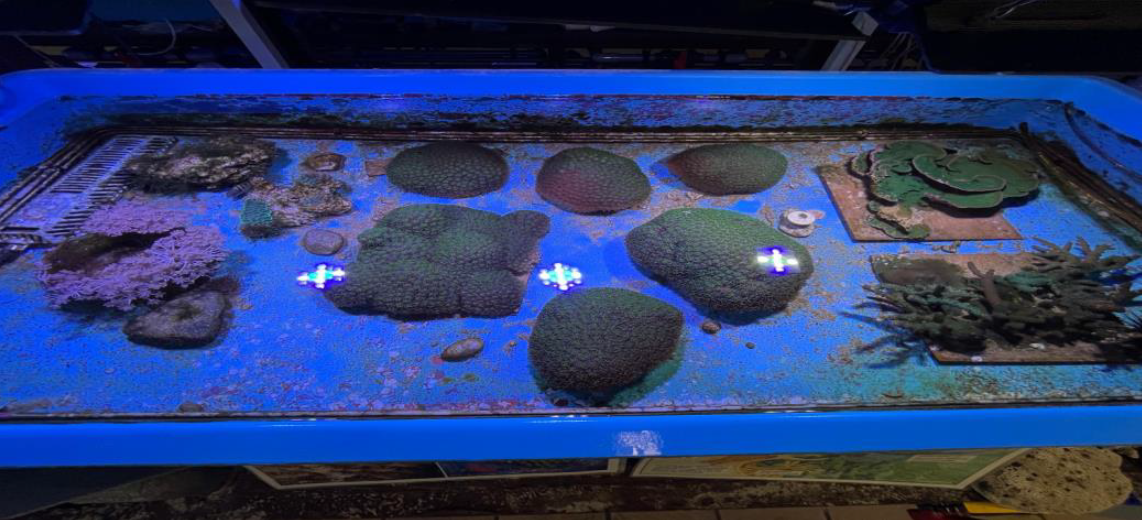
The Mesocosm system is supplied with filtered seawater to reduce the no. of algae and other microorganisms. Multiple parameters could be controlled in the mesocosm system, such as pH, salinity, and temperature, etc., and hence users could create the environment needed for the experiments.
For example, a more acidic and warmer environment could be created, so users could observe if the corals were able to adapt to the severe living conditions and how they would cope with the environment.
The general seawater tanks are flow-through tanks, with raw seawater supplied. Different local organisms are kept in the tanks for supporting UG courses, such as OCES 1001 The Earth is a Blue Planet, and OCES 5300 Chemical Oceanography. Conservation of the ocean is also promoted to the public. Tours of OCRF are held on request, students and other public would be introduced to the local biodiversity and shown some of the local species.
Marine Life in OCRF
OCRF houses different kinds of marine animals for conservation and public educational use; most of them are local species. Below is a brief introduction of some animals OCRF houses, including horseshow crab, lobster and corals.
Horseshoe crab (Limulidae)
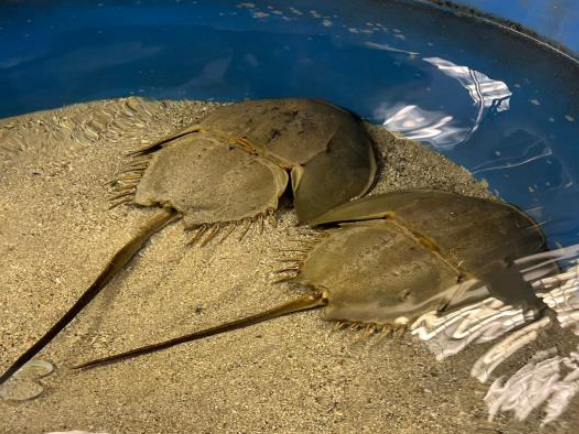
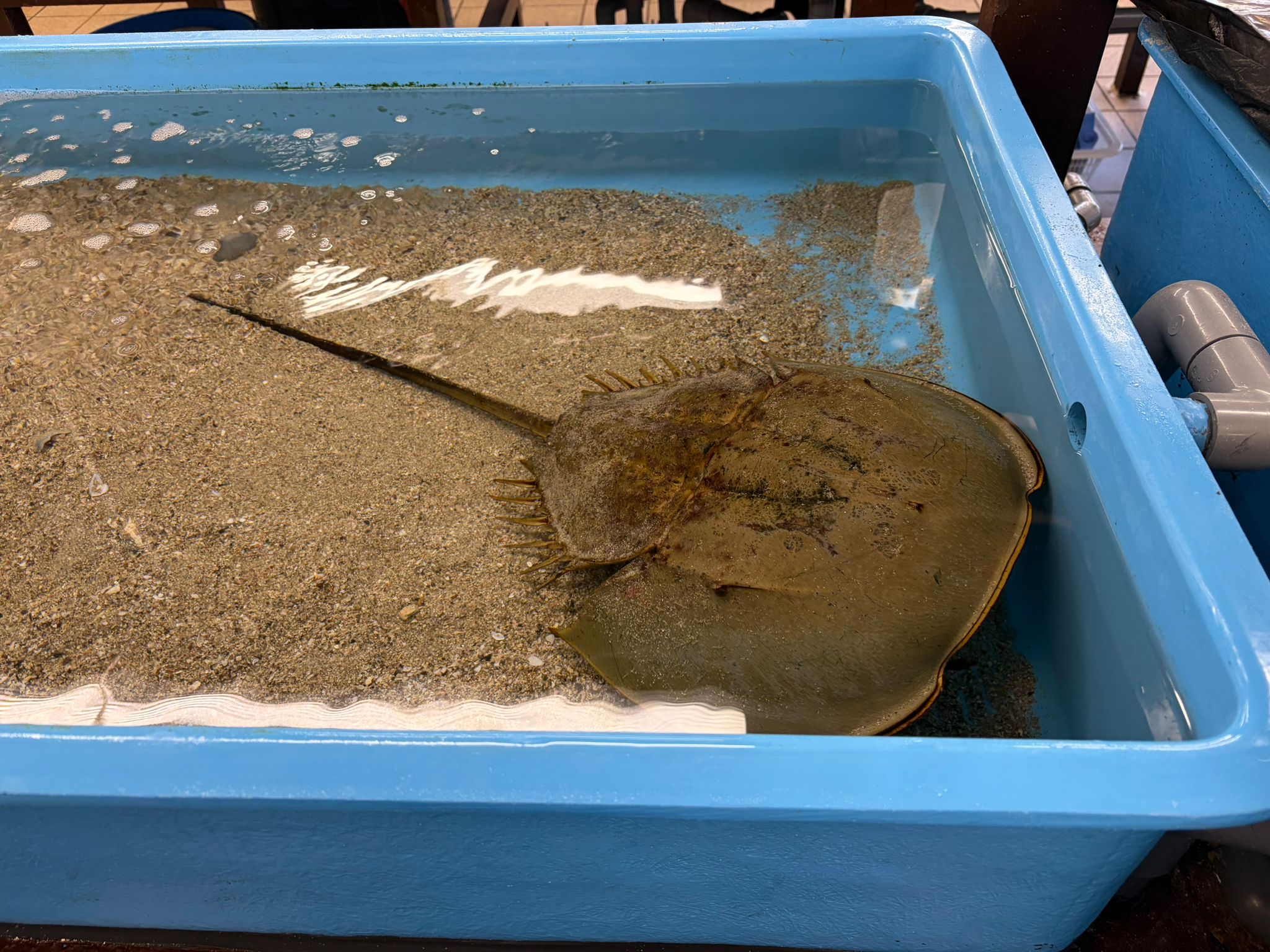
It is one of the “living fossils” found nowadays, which has changed little since their first appearance in the Early Triassic (~200 million years ago). It is not a crustacean even though we call them “crab”. It is an arthropod which belongs to the Limulidae family, and they are closely related to scorpions and spiders nowadays. Currently there are 4 species in the world, and Hong Kong has two of them, the tri-spine horseshoe crab (Tachypleus tridentatus)and the round-tailed horseshoe crab (Carcinoscorpius rotundicauda).
The body structure of horseshoe crabs consists of 3 parts, the cephalothorax, the opisthosoma, and the long tail-like section of telson. It is covered by a hard shell like a shield which protects itself. Pairs of eyes are located on their shell; and they are more sensitive to light in the nighttime than daytime.
Horseshoe crab consumes worms or small mollusks (e.g. clams for the two horseshoe crabs OCRF housed). They have a digestive system containing the mouth, esophagus, stomach, and some parts of the intestine. And they usually forage at nighttime.
Their quantity in the wild has decreased significantly in recent years. As they mate on sandy or muddy shores, these sites have been disrupted by human activities and hence affect the mating of the horseshoe crabs. Also, as the blood of horseshoe crabs contains a special clotting reaction to bacteria, blood is extracted from them for medical purposes to detect bacterial contamination. A very high demand for blood is hence created. Horseshoe crabs may die during the extraction process. The tri-spine horseshoe crab has been defined as an endangered species by the IUCN.
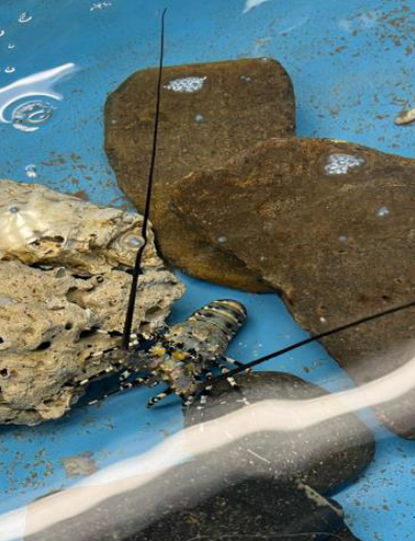
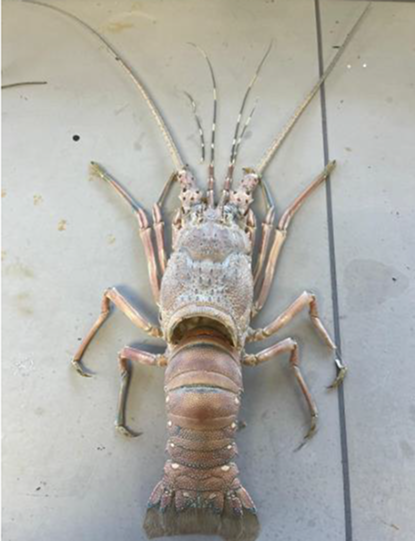
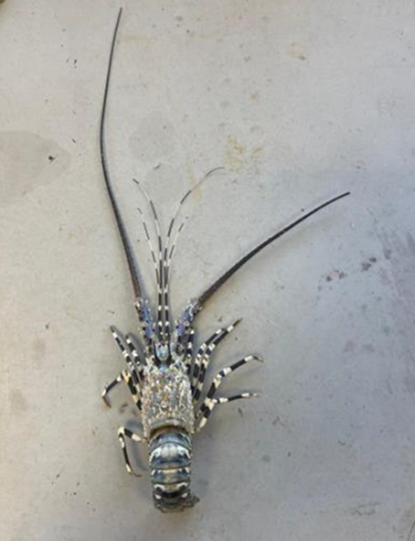
Lobster
Lobsters are marine crustaceans belonging to the family Nephropidae, commonly found in cold waters of the Atlantic Ocean and parts of the Pacific. They are characterized by their hard exoskeleton, segmented body, and prominent claws, which serve as tools for defense and food capture.
These animals are omnivorous. They would eat fish, mollusks, algae, and other organic matter. And like other arthropods, lobsters grow by molting, shedding their exoskeleton periodically—a process that makes them vulnerable to predators during this stage. As they would need to stop eating for a period before molting could be performed, lobsters would be exhausted due to starvation. Also, without the protection of the hard exoskeleton, it would be easy for them to be attacked by other predators.
Interestingly, lobsters can live for decades, with some species reaching over 50 years of age. They also display remarkable regenerative abilities, capable of regrowing lost limbs. These traits, combined with their unique biology, make lobsters not only a culinary delicacy but also a subject of scientific study in aging and regeneration.
Corals
Corals are colonial invertebrates in the ocean. Corals are formed by many identical polyps. Each polyp is a sac-like animal with tentacles surrounding its mouth in the middle. They are able to catch plankton and other prey floating in the waters, but corals obtain energy and food through photosynthesis of the algae living inside them. The algae also give the polyps colors and make the whole coral reef look colorful.
There are two types of corals, stony corals and soft corals. For stony corals, they excrete calcium carbonate absorbed from the seawater and form the exoskeleton which supports their structure. Also, the polyps of stony corals would consist of a six-fold symmetry, with cylindrical tentacles. As for soft corals, they do not have the exoskeleton, but their tissues are often reinforced by calcium carbonate. The polyps of soft corals are in eight-fold symmetry.
Coral reefs are essential to the ocean; they support about 25% of the world's marine life. They provide habitat, food and breeding ground for many marine organisms. Coral reefs are also important to humans, as they provide seafood for us. Reefs also act as a natural barrier that absorbs energy from waves, protecting the shoreline from storms and erosion.
When the condition of the seawater is unfavorable to corals, the polyps are under stress, they would expel the algae inside them and lead to coral bleaching. This condition is reversible if the condition of the seawater changes and becomes more suitable for the corals. If the unfavorable condition persists, polyps will die due to starvation and hence a large scale of bleaching would be observed.